Independent Living vs. Assisted Living: Where Does Respite Care Fit in the Senior Care Spectrum?
Business Name: BeeHive Homes of Mesquite
Address: 780 2nd S St, Mesquite, NV 89027
Phone: (702) 381-6899
BeeHive Homes of Mesquite
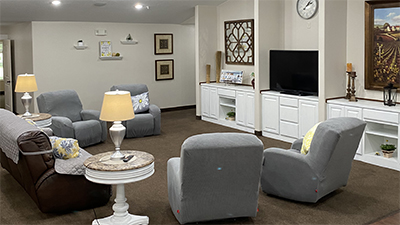
At BeeHive Homes of Mesquite, Nevada, we offer the finest assisted living experience available in a cozy, comfortable homelike setting. Each of our residents has their own spacious room with an ADA approved bathroom and shower. We prepare and serve delicious home-cooked meals three times a day every day. We maintain a small, friendly elderly care community. We provide regular activities that our residents find fun and contribute to their health and well-being. Our staff is attentive and caring and provides assistance with daily activities to our senior living residents in a loving and respectful manner. We would like to invite you to tour and experience our assisted living home and feel the difference.
780 2nd S St, Mesquite, NV 89027
Business Hours
Families hardly ever get up one early morning and decide, calmly and confidently, that it is time to move a parent into senior housing. Generally it comes after a sluggish construct of worry: a fall that could have been worse, medications that are getting blended, a partner who is clearly exhausted from caregiving, or a sneaking fear that you are missing out on warning signs due to the fact that you live throughout town or in another state.
In that fog of issue, different terms start to blur together. Independent living. Assisted living. Respite care. Skilled nursing. It can feel like alphabet soup at the precise moment you need clearness and calm, not jargon.
This is where a clear understanding of how independent living, assisted living, and respite care connect to each other can change the trajectory of choice making. Rather of reacting to crisis, you can start to see senior care as a continuum, with alternatives that can be combined or sequenced to fit your household's reality.
I have invested years sitting at kitchen area tables and facility meeting room with households who feel stuck between keeping a loved one in your home and "putting them in a home." The reality is less plain. Independent living and assisted living serve different requirements, and respite care can be a versatile bridge between them, or a safety valve that protects both the older adult and the main caregiver.
The senior care spectrum in plain language
Senior care is not a single service. It is more detailed to a spectrum that varies from totally independent living to intensive medical care. Where your loved one fits depends upon function, security, support group, and choices, not on age alone.
Roughly speaking, it appears like this:
At one end are older adults residing in their own homes, maybe with some home care or aid from household, but essentially handling their own lives. At the other end are nursing homes and long term care centers, where people get 24 hour medical and personal care due to the fact that of serious health problem or innovative disability.
Independent living and assisted living being in the middle. They are both forms of residential senior care, but they are constructed on extremely different assumptions about what the resident can and can not do.
Respite care fits differently. It can be a short term stay inside an assisted living community, a couple of weeks of in home care, or a temporary bed in a proficient nursing facility after a hospitalization. It is less a location and more a function: temporary relief, support, or testing ground.
Understanding those differences is the primary step towards utilizing each alternative wisely.
Independent living: lifestyle first, care second
Independent living communities are created for older adults who can manage their own individual care but want the convenience, security, and social structure of a senior environment. I typically explain them as apartments or homes tailored for older grownups, wrapped in hospitality services instead of health care.
Most independent living settings provide personal apartment or condos with kitchen spaces or complete kitchens, common dining-room, housekeeping, maintenance, arranged transport, and a calendar of social and wellness activities. Some feel like peaceful garden neighborhoods, others like cruise ships that never leave port.
Crucially, independent living presumes that residents can:
- Handle basic activities of daily living, like bathing, dressing, and toileting, without hands on help
- Manage their medications, whether by arranging pill boxes, using pointer systems, or counting on household oversight
- Get to the dining-room, medical professional visits, and activities on their own or with minimal informal assistance
If a community notices that a resident is having a hard time, they may carefully raise concerns with the family, but the legal and regulatory structure seldom enables them to action in with hands on care as an assisted living facility could. Some independent living neighborhoods do permit homeowners to generate private duty caregivers, however that is a different layer, not constructed into the core service.
Independent living works best for individuals who:
- Are mostly safe in your home but feel lonesome, bored, or burdened by household tasks
- Have early physical restrictions but no significant cognitive impairment
- Want to "best size" from a house that is too big or too much work
- See the move as a way of life choice instead of a medical necessity
Families sometimes overestimate the level of care readily available in independent living because the environment feels supportive. I have seen adult children presume that personnel will notice if Mom has actually not taken her high blood pressure medication for three days. In numerous neighborhoods, nobody is actually examining. The dangers are subtle at first: missed meals, bad hydration, sluggish health decrease. Over time, they can result in falls, hospitalizations, or an abrupt crisis that might have been preventable.
Assisted living: assistance with life, not a hospital
Assisted living is created for older grownups who are not safe living entirely on their own but do not require continuous experienced nursing care. It is the workhorse of contemporary elderly care: a blend of real estate, personal care, and in some cases limited health associated services.
Physically, assisted living can look similar to independent living: private or semi private apartment or condos, common dining, activities, house cleaning. The difference lies behind the scenes. Assisted living facilities have caregiving staff, often called resident assistants or licensed nursing assistants (CNAs), offered around the clock. Accredited nurses are senior living beehivehomes.com typically present or on call, depending on state regulations.
Typical assisted living services include aid with bathing, dressing, grooming, toileting, transfers, and medication administration or management. Personnel react to call buttons, check in on homeowners, and collaborate with outside healthcare providers. Many communities can also manage persistent conditions like diabetes, some kinds of oxygen therapy, or moderate to moderate cognitive problems, though each facility specifies its own limits.
Assisted living works best for people who:
- Need hands on aid with a minimum of some activities of everyday living
- Are at danger of falls, wandering, or medication errors at home
- Have family caregivers who are burning out or can not provide 24 hour support
- Still take advantage of social engagement and a residential, non institutional environment
Families often see assisted living as a last option, however when picked early enough, it can really protect self-reliance. I have actually viewed homeowners grow stronger and more positive once the constant worry of falling in the shower or forgetting insulin dosages was gotten rid of. Instead of struggling alone, they could save their energy for the parts of life they still enjoyed.
That stated, assisted living is not a small healthcare facility. Staff can not legally carry out certain medical jobs outside their license, and they are not geared up to manage highly complicated cases, ventilators, or serious behavioral symptoms without outside support. The line between assisted living and nursing home level care is partially scientific and partly regulatory, and it differs by state.
Cost and payment realities
The monetary aspect frequently forms what is possible, in some cases more than anybody likes to confess. Both independent living and assisted living are primarily personal pay in the United States. They may look comparable on a brochure, but how the money works can be really different.
Independent living is normally structured like rent plus services. Homeowners pay a month-to-month fee that covers the home, some or all meals, housekeeping, and features. Due to the fact that there is no bundled personal care, the base expense is frequently lower than assisted living for the same square footage. If a resident generates private caregivers, those services are paid individually, generally by the hour, and can accumulate quickly.
Assisted living costs consist of the apartment and a specified level of care. Some communities use tiered pricing based on how much assistance the resident needs, such as "Level 1" for light help and "Level 4" for substantial assistance. Others use a point system or all inclusive prices. Monthly expenses can increase if the resident's care requires grow, which can amaze households who expected a steady bill.
Health insurance coverage and Medicare cover healthcare, but they generally do not pay for room, board, or long term custodial care in assisted living. Long term care insurance coverage can assist if they remain in location and the benefit triggers are met, but the provisions are extremely variable. Some states provide minimal Medicaid coverage for assisted living, yet waiting lists and eligibility guidelines are common.
Respite care interacts with these expenses in crucial ways, particularly as a way to "test drive" a neighborhood without committing to a long term agreement, or to purchase time while sorting out finances or benefits.
Where respite care fits: a versatile security net
Respite care is short-lived take care of an older adult who typically lives at home or in a less supported setting, so that the primary caretaker can rest, take a trip, recover from health problem, or address other duties. It can last anywhere from a couple of hours a week to a number of weeks at a time.
Respite care can be provided in a number of kinds:
- In home respite, where a paid caregiver comes into the home to offer hands on support and supervision.
- Adult day programs, where the older adult invests part of the day in a structured environment with activities, meals, and personnel oversight, then returns home in the evening.
- Short term remains in assisted living or knowledgeable nursing, where the individual survives on website for a set duration with access to the same services as irreversible residents.
Each variation plays a different role, but all share the same objective: to prevent caregiver burnout and lower the risk of crisis by planning breaks instead of awaiting collapse.
In the context of independent and assisted living, respite care typically serves three vital functions.
First, it provides trial runs. A short stay in an assisted living facility can reveal whether a person who insists they are "fine in the house" really thrives with structured support. I have seen happy, independent parents who battled the idea of "moving" agree to a two week respite stay while their child had surgery. By the end, they had made pals at lunch, taken pleasure in having somebody else manage medications, and decided to stay completely by themselves terms.
Second, it supplies pressure relief for household caregivers trying to sustain somebody in your home. A boy may be doing everything right for his mother in independent living, going to daily, handling her medications, and organizing outdoors caretakers. A planned three week respite stay in assisted living while he travels for work protects both of them from the all too common pattern of eleventh hour, crisis driven placement.
Third, respite care covers shifts, especially after hospitalizations or rehab stays. A person who lived independently before a fall may not be safe to return straight to their old plan, however might also not require a long-term assisted living relocation. A month of respite in assisted living permits time to see what their new standard truly is, without dedicating to a long term lease.
Independent vs assisted living: useful differences that matter
On paper, the differences in between independent living and assisted living are clear. In truth, households typically fight with gray zones. A parent might be mainly independent but gradually losing weight. Or they may "manage" medications but just due to the fact that a spouse continuously reminds them. These borderline circumstances expose the practical spaces between the two models.
A couple of styles come up repeatedly in real cases.
Supervision versus care. Independent living personnel keep an eye on the community environment, however they are not responsible for private locals' health in the very same method assisted living staff are. If someone does disappoint up for supper for three nights, independent living might ultimately knock, however assisted living will likely see and examine much sooner, often within hours.
Timing of help. In assisted living, pushing the call button triggers a staff response. In independent living, there is often no expectation of instant in room support. Homeowners who fall in their houses may wait a lot longer to be discovered unless they have additional tools like emergency pendants, movement sensing units, or everyday check in calls.
Medication management. This is typically the turning point. As soon as an older adult can no longer securely self handle medications, a simply independent setting becomes dangerous. Assisted living can officially take control of, recording administration, tracking rejections, and collaborating with doctors. Attempting to duplicate that in independent living through family oversight works just as long as the caretaker can reliably visit or monitor.
Progression of illness. Chronic conditions like Parkinson's illness, heart disease, or early dementia can be reasonably well supported in independent living initially. Gradually, the cognitive or physical demands on the resident boost. If the neighborhood does not have actually built in help, the family should serve as the buffer. Eventually, many families reach a tipping point where the patchwork of assistants and household visits becomes more complex and pricey than an assisted living move.
Respite care can be used strategically around these tipping points. A brief assisted living stay for "healing" after a fall can reveal hidden care requirements that were masked in your home or in independent living. Possibly personnel notice that the resident requires moderate help with toileting at night, something the spouse or adult child never ever completely confessed. That info can form whether the next step is more home support, a permanent move, or another type of senior care.
Using respite care to make much better long term decisions
Families who use respite care attentively tend to make more confident, less reactive options. The key is to treat respite not only as momentary relief, but as information gathering.
A brief assisted living respite stay can answer several useful concerns:
- How does the person respond to staff support with bathing, dressing, or medications?
- Do they sign up with activities and meals, or retreat to their room?
- Are there behavioral or cognitive issues that emerge more clearly in a structured setting?
- Do regular nighttime needs emerge that would be difficult to handle at home?
A genuine example: an 84 years of age female, living in independent living, physically capable but very isolated, agreed to a 1 month respite in assisted living after a hospitalization for dehydration. Her child made certain this was just a bridge back to self-reliance. During respite, personnel saw pronounced short-term amnesia, medication confusion, and stress and anxiety when regimens altered. Her child had actually dismissed these as "just aging," however in assisted living the patterns were apparent. Because this surfaced throughout a prepared respite rather than a crisis, they could go over alternatives calmly. The lady picked to remain in assisted living, framing it as "graduating to more help," rather than feeling forced.
Respite can likewise provide caregivers a realistic view of their own limitations. I have actually seen deeply devoted spouses who insist they "can manage" whatever in your home, just to recognize, during a two week respite stay, how tired they really were. They sleep through the night for the very first time in months, notification pains they had actually overlooked, or finally schedule their own past due medical appointments. That lived contrast typically shifts the conversation from "I am stopping working if I can refrain from doing all of it" to "We need a sustainable plan."
Questions households ought to ask before selecting a level of care
Families often feel forced to decide rapidly. Taking even a short time out to ask the ideal concerns can prevent mistakes. When weighing independent living, assisted living, and the use of respite care, it assists to start with a blunt, reality based self assessment.
Consider this brief checklist as you examine options:
- Is my loved one safe alone for prolonged durations, including in the evening, without immediate assistance nearby?
- Can they consistently manage all medications, meals, and health without reminders or hands on assistance?
- What particular jobs am I (or other relative) providing for them now, and how sustainable is that over the next year?
- How would things alter if I got ill, required to travel, or could not exist as often?
- Have we attempted or a minimum of discussed a trial respite stay to comprehend how they work with more structured support?
The answers often reveal whether the present setup is barely holding together or really feasible. If self-reliance depends upon one overwhelmed caregiver and brittle regimens, respite care is not a high-end. It is an early intervention.
Coordinating respite within different settings
Where and how you organize respite depends heavily on where your loved one lives today.
For someone already in independent living, respite might involve a temporary move to an assisted living house within the exact same campus, if readily available, or to a nearby center. Some larger senior living campuses have both independent and assisted living under one umbrella, with standard prices for respite stays. Others partner with regional assisted living or experienced nursing facilities.
For someone living alone in a private home, respite may mean generating in home caretakers part time or full-time for a set duration, registering in an adult day program, or setting up a short-term assisted living stay. Adult day programs are particularly underused. A few days per week in a structured setting can provide caretakers daytime relief and likewise provide early warning signs of decrease. Staff notification who is quietly withdrawing, who is having problem with fundamental jobs, and who may take advantage of more detailed senior care.
If the person currently lives in assisted living, respite may be required for the caretaker more than for the resident. Adult children in some cases move a parent closer, assist them settle, then recognize they require to go back temporarily. A planned week where the community knows the child is purposefully not going to can test whether the care strategy is really appropriate without her consistent presence.
Payment for respite care is irregular. Some long term care insurance plan cover it as much as a maximum number of days each year. Certain government programs, especially for veterans or individuals with specific diagnoses, may money limited respite hours. More frequently, families pay independently by the day or week. While that can feel costly, it is frequently cheaper than the downstream costs of caregiver collapse: lost jobs, illness, or rushed long term placement in the incorrect setting.
Emotional resistance and how respite can soften it
The hardest part of all of this is seldom the documents or logistics. It is the psychological weight behind words like "care," "facility," and "help." Many older grownups hear "assisted living" and picture old design nursing homes. Many caretakers hear "respite" and feel guilty at the very concept of a break.
I have discovered not to argue directly with those sensations. Rather, I frame respite and assisted living as tools to secure autonomy and relationships.
For fiercely independent senior citizens, a short, plainly time limited respite stay frequently feels more appropriate than an open ended relocation. They can agree to "attempt it while I recover from this fall" or "give you a break since you have your own surgery coming up." When on site, they experience the day to day truth instead of their worries. Often they choose to remain. Often they do not, but both results are based upon lived experience, not thought of scary stories.
For caretakers drowning in duty, calling respite as a health intervention can assist. Fatigue, persistent sleep loss, and unmanaged tension are danger elements for serious disease. Safeguarding the caregiver's health is part of accountable elderly care, not a selfish extravagance. A scheduled respite block can be set up on the calendar, like any other medical appointment, to shift it out of the realm of vague intention into concrete plan.
The other emotional piece is timing. Relocations made in the middle of crisis tend to feel distressing. Moves that occur after one or more respite stays typically go more smoothly. The surroundings are familiar. Staff are not complete strangers. Routines have currently been tested and tweaked.
Bringing it together: utilizing each option in the right way
Independent living, assisted living, and respite care are not competitors. Each addresses a specific slice of need, and the most resilient care strategies frequently weave them together over time.
Someone might begin in their own home with a few hours of in home respite care weekly. As the caretaker's problem grows, they may include an adult day program, then shift to independent living for social support and minimized family demands. A bad fall might activate a month of respite in assisted living, exposing formerly hidden care needs. That trial might cause a permanent assisted living residency, with regular respite intervals built in for member of the family who stay deeply involved.
Another individual may move directly from home to assisted living after a stroke, using respite coverage from their long term care policy to fund the first 1 month while documents catches up. Later on, as they stabilize, they may shift to a lower care level within the same school or move more detailed to a various relative, again using a short respite stay as a soft landing.
The common thread is flexibility. Instead of locking into a single label like "independent" or "assisted," families who believe in terms of a spectrum can adjust as conditions alter. Respite care acts as the shock absorber because system, taking pressure off at key minutes, exposing real requirements, and enabling modifications before small issues end up being emergencies.
Senior care is rarely neat. Conditions advance unevenly. Household situations change. Facilities progress. The goal is not to select the best option once, but to construct a path that can flex without breaking. Understanding how independent living, assisted living, and respite care relate provides you more space to maneuver, and more ways to protect both the older adult's dignity and the caretaker's well being over the long run.
BeeHive Homes of Mesquite provides assisted living care
BeeHive Homes of Mesquite provides respite care services
BeeHive Homes of Mesquite supports assistance with bathing and grooming
BeeHive Homes of Mesquite offers private bedrooms with private bathrooms
BeeHive Homes of Mesquite provides medication monitoring and documentation
BeeHive Homes of Mesquite serves dietitian-approved meals
BeeHive Homes of Mesquite provides housekeeping services
BeeHive Homes of Mesquite provides laundry services
BeeHive Homes of Mesquite offers community dining and social engagement activities
BeeHive Homes of Mesquite features life enrichment activities
BeeHive Homes of Mesquite supports personal care assistance during meals and daily routines
BeeHive Homes of Mesquite promotes frequent physical and mental exercise opportunities
BeeHive Homes of Mesquite provides a home-like residential environment
BeeHive Homes of Mesquite creates customized care plans as residents’ needs change
BeeHive Homes of Mesquite assesses individual resident care needs
BeeHive Homes of Mesquite accepts private pay and long-term care insurance
BeeHive Homes of Mesquite assists qualified veterans with Aid and Attendance benefits
BeeHive Homes of Mesquite encourages meaningful resident-to-staff relationships
BeeHive Homes of Mesquite delivers compassionate, attentive senior care focused on dignity and comfort
BeeHive Homes of Mesquite has a phone number of (702) 381-6899
BeeHive Homes of Mesquite has an address of 780 2nd S St, Mesquite, NV 89027
BeeHive Homes of Mesquite has a website https://beehivehomes.com/locations/mesquite/
BeeHive Homes of Mesquite has Google Maps listing https://maps.app.goo.gl/FouNDQWSGjDorrdT7
BeeHive Homes of Mesquite has Instagram page https://www.instagram.com/beehivehomesmesquite/
BeeHive Homes of Mesquite has an TikTok page https://www.tiktok.com/@beehivehomesofmesquite
BeeHive Homes of Mesquite has an YouTube page https://www.youtube.com/@hamiltonshives4468
BeeHive Homes of Mesquite won Top Assisted Living Homes 2025
BeeHive Homes of Mesquite earned Best Customer Service Award 2024
BeeHive Homes of Mesquite placed 1st for Senior Living Communities 2025
People Also Ask about BeeHive Homes of Mesquite
What is BeeHive Homes of Mesquite Living monthly room rate?
Our base rate is $4,400/month plus a one-time community fee of $1,500. We do an assessment of each resident's needs upon move-in, so a resident's rate may be slightly higher. Based on the assessment, a resident may be in Tier I, II, or III with pricing from $4,900 to $5,300 per month. However, we do not add any "a la carte" charges after that rate is set. There are no add-ons or hidden fees
Does Medicare or Medicaid pay for a stay at Bee Hive Homes?
Medicare pays for hospital and nursing home stays, but does not pay for assisted living. Some assisted living facilities are Medicaid providers, but we are not. We do accept private pay, long-term care insurance, and we can assist qualified Veterans with approval for the Aid and Attendance program
Do we have a nurse on staff?
We do have a nurse on contract who is available as a resource to our staff but our residents' needs do not require a nurse on-site. We always have trained caregivers in the home and awake around the clock
What can you tell me about the food at Bee Hive?
You have to smell it and taste it to believe it! We use dietitian-approved meals with alternates for flexibility, and we can accommodate needs for different texture and therapeutic diets. We have found that most physicians are happy to relax diet restrictions without any negative effect on our residents
Do we have a pharmacy that fills medications?
We do have a relationship with an excellent pharmacy that is able to deliver to us and packages most medications in punch-cards, which improves storage and safety. We can work with any pharmacy you choose but do highly recommend our institutional pharmacy partner
Where is BeeHive Homes of Mesquite located?
BeeHive Homes of Mesquite is conveniently located at 780 2nd S St, Mesquite, NV 89027. You can easily find directions on Google Maps or call at (702) 381-6899 Monday thru Sunday: 8:00am to 7:00pm
How can I contact BeeHive Homes of Mesquite?
You can contact BeeHive Homes of Mesquite by phone at: (702) 381-6899, visit their website at https://beehivehomes.com/locations/mesquite/ or connect on social media via Instagram Facebook or TikTok
Take a drive to Los Lupes. Los Lupes provides a welcoming dining destination where families supporting loved ones through Assisted living memory care senior care elderly care and respite care can gather for a meal.